Sewer Scope Inspection in Chicago
Sewer camera inspections across Chicagoland, Illinois & Indiana
See Inside the Line Before You Buy
The main sewer line carries everything that goes down the drains from the house out to the public sewer. It is buried under the basement floor, the yard and often the parkway, so a standard home inspection cannot see it. Drains can run fine on inspection day while the pipe underneath is cracked, full of roots or sagging.
In a sewer scope, we send a camera through the main sewer line to find cracks, root intrusion, blockages and offsets that are not visible from the surface. It is a clear, non-invasive look inside the pipe, and sewer line repairs are some of the most expensive surprises a homeowner can face. A scope shows them before closing, while you can still ask questions, negotiate or plan.
Gold Coast Home Services offers sewer camera scopes across Illinois and Indiana, on their own or with a residential home inspection or commercial inspection.
Call/Text (312) 358-1200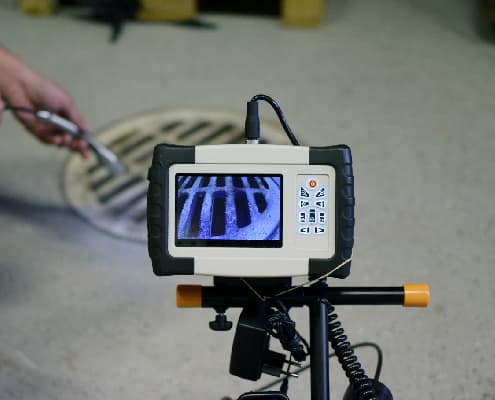
Why Chicago Sewer Lines Fail
Much of Chicago and its older suburbs was built before 1960: brick bungalows, greystones, two-flats and frame houses on narrow lots. Many of those homes still drain through their original sewer lines, often clay tile outside the house and cast iron inside. Clay joints loosen and crack over the decades, and cast iron rusts and builds up scale that narrows the pipe.
Mature parkway and backyard trees add to it. Roots find small gaps at pipe joints, grow inside and catch everything that flows past. Freeze and thaw cycles move the soil every winter, which can shift sections of pipe out of line or let a section settle into a low spot that holds water.
The line between the house and the public sewer is usually the property owner's to maintain, so once you close, any repair is yours.

What a Sewer Scope Can Show
These are the conditions we look for as the camera travels down the line.
Cracks and broken sections
Cracked or broken pipe lets water out into the soil and lets soil and roots in. Over time a broken section can collapse and block the line completely.
Root intrusion
Roots growing through joints are one of the most common finds under older, tree-lined streets. Even fine roots catch debris and slow the line down.
Offsets and separated joints
When two sections of pipe shift out of line, the lip that forms catches waste and paper, which leads to repeat backups.
Blockages and low spots
Grease, scale and debris narrow the pipe, and a sagging section (a belly) holds standing water. Both show up as slow drains long before a full backup.
Sewer Scope Questions
Do I need a sewer scope on a newer home?
It matters most on older homes and homes with large trees, but a newer line can still have a crushed section, a bad connection or construction debris. If the home has had slow drains or backups, a scope is worth it at any age.
How does the camera get into the line?
Usually through a cleanout, an access fitting on the main line in the basement or yard. The camera needs a way in, so tell us if you know where the cleanout is.
What if the scope finds a problem?
We explain what the camera found and note it in your inspection report. Before closing, get a repair estimate from a licensed plumber or sewer contractor so you can negotiate or plan for it.
Can a sewer scope be added to my inspection?
Yes. A sewer camera scope can be added to a residential or commercial inspection. Specialty services are priced separately, so contact us for a custom quote.
Schedule Your Sewer Scope
Call or text to add a sewer scope to your inspection or book one on its own. For more background, read why sewer camera inspections matter before you buy a Chicago-area home.
Related: All services · Radon testing · Commercial inspection · Get a quote
Sewer Camera Scope
Serving Chicagoland, Illinois and Indiana. Over 20 years of combined experience in the housing industry.
tonyldiggs@gmail.comCall: (312) 358-1200Schedule Online